
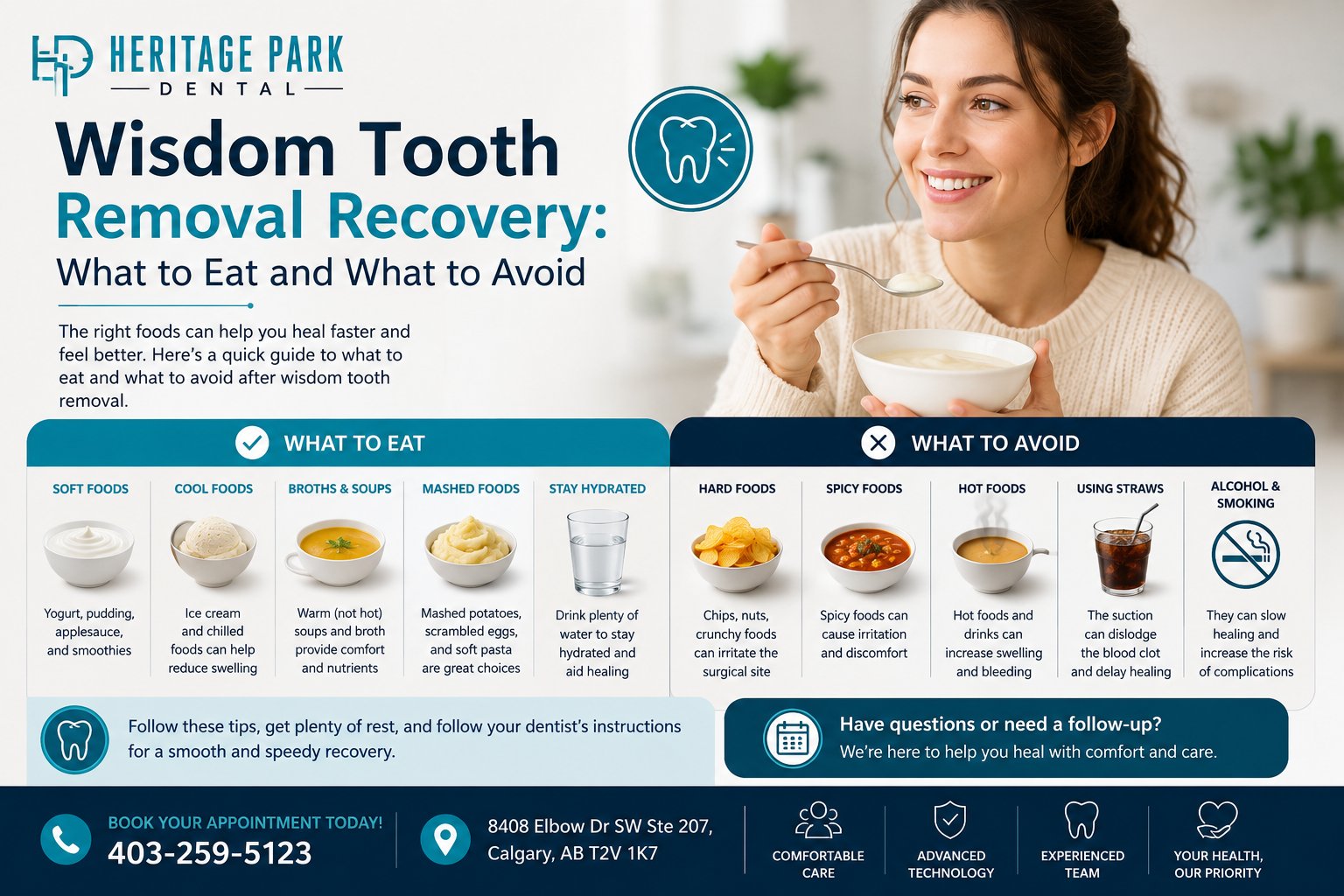
Getting your wisdom teeth removed is a common dental procedure, but recovery can feel uncomfortable if you are not sure how to care for yourself afterward. Eating the right foods and avoiding certain habits can help your mouth heal faster and lower the risk of problems. A dentist in SW Calgary can guide you through recovery with clear instructions that are easy to follow.
What Happens After Wisdom Tooth Removal?
After wisdom tooth removal, your mouth needs time to heal. The area where the tooth was removed forms a blood clot. This clot protects the bone and nerves underneath. If the clot gets disturbed, healing may slow down, and pain can increase.
During the first few days, it is normal to notice:
- Mild swelling
- Soreness
- Slight bleeding
- Jaw stiffness
- Trouble chewing hard foods
Most people start feeling better within a week, but full healing may take longer.
Why is Food Important During Recovery?
Your mouth may be sensitive following surgery. Consuming soft and mild foods can contribute to healing. The appropriate food will also:
- Decrease irritation.
- Lessen pain.
- Aid in the healing process.
- Avoid any harm to the blood clot.
Choosing meals carefully during recovery makes a big difference.
What Should You Eat After Wisdom Tooth Removal?
Soft foods are the safest choice for the first few days. They are easier to chew and less likely to irritate your mouth.
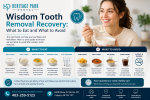
Soft Foods to Eat During the First 24 Hours
Here are some good options right after surgery:
| Food | Why It Helps |
| Applesauce | Easy to swallow |
| Yogurt | Cool and gentle on gums |
| Mashed potatoes | Soft and filling |
| Smooth soups | Warm and comforting |
| Pudding | Requires no chewing |
| Smoothies | Good source of nutrients |
Avoid using a straw when drinking smoothies because suction may disturb the healing area.
What Foods Can You Eat After a Few Days?
As your mouth begins to feel better, you can slowly add more foods to your meals.
Foods You Can Add Later
- Scrambled eggs
- Oatmeal
- Soft pasta
- Rice
- Soft fruits like bananas
- Steamed vegetables
- Cottage cheese
Chew slowly and avoid putting pressure near the healing area.
What Foods Should You Avoid?
Some foods can slow healing or cause pain after wisdom tooth removal.
Foods to Stay Away From
Crunchy Foods
These can poke the healing area.
Examples include:
- Chips
- Crackers
- Popcorn
- Nuts
Sticky Foods
Sticky foods may pull at the healing site.
Avoid:
- Caramel
- Gum
- Chewy candy
Spicy Foods
Spices can irritate sensitive tissue and cause discomfort.
Hot Foods and Drinks
Very hot foods may increase bleeding or swelling during the first day.
Hard Foods
Hard foods require strong chewing and can strain your jaw.
Examples:
- Steak
- Hard bread
- Raw vegetables
Patients searching for wisdom tooth extractions in SW Calgary are often advised to follow a soft-food diet carefully during the first week after treatment.
Can You Drink After Wisdom Tooth Removal?
Yes, staying hydrated is important. Drink plenty of water throughout recovery.
Drinks That Are Usually Safe
- Water
- Milk
- Cold herbal tea
- Smooth soups
Drinks to Avoid
- Alcohol
- Fizzy drinks
- Very hot coffee
- Energy drinks
Avoid straws for at least a few days because suction can remove the blood clot and cause a painful condition called dry socket.
How Can You Reduce Swelling and Pain?
Swelling is common after surgery, especially during the first two days.
Helpful Recovery Tips
- Place an ice pack on your cheek
- Rest with your head slightly raised
- Take medicines exactly as instructed
- Eat soft foods
- Drink enough water
- Avoid smoking
These simple steps can make recovery more comfortable.
What is Dry Socket?
Dry socket happens when the blood clot comes out too early. It leaves the bone exposed and can cause severe pain.
Signs of Dry Socket
- Severe pain a few days after surgery
- Bad taste in the mouth
- Unpleasant smell
- Pain spreading to the ear or jaw
If you notice these symptoms, contact a dental clinic right away.
When Can You Return to Normal Eating?
Most people can slowly return to normal meals within about a week. However, healing times are different for everyone.
Start with soft foods first and slowly test firmer foods as comfort improves.
A Simple Recovery Timeline
|
Time After Surgery |
Suggested Foods |
| First 24 hours | Yogurt, soup, pudding |
| Days 2–3 | Mashed potatoes, oatmeal |
| Days 4–7 | Pasta, eggs, soft vegetables |
| After 1 week | Slowly return to regular foods |
If you are looking for wisdom tooth extractions near you, ask the dental team for personal recovery advice based on their treatment.
What Habits Should You Avoid During Healing?
Certain habits may slow healing or increase discomfort.
Avoid These During Recovery
- Smoking
- Drinking through a straw
- Touching the area with fingers
- Heavy exercise for the first few days
- Spitting forcefully
Keeping the area clean and protected supports faster healing.
When Should You Call a Dentist?
Some discomfort is normal, but certain symptoms should not be ignored.
Contact a Dental Clinic If You Notice:
- Heavy bleeding
- Fever
- Severe swelling
- Trouble breathing
- Pain that becomes worse instead of better
A dentist near you can examine the area and make sure healing is progressing properly.
Recover Comfortably With Care From Heritage Park Dental
The process of healing becomes a lot simpler after having one’s wisdom teeth extracted if all of the necessary recovery processes are followed. Consuming soft foods and sleeping well may help ensure proper healing. If you have questions about recovery or need guidance before treatment, our caring team at Heritage Park Dental is ready to help. Book your visit today and get support for a smoother and more comfortable recovery experience.